You have decided to visit the Seven Churches of Revelation in Turkey. Now comes the practical question:
Should you choose the three-day tour or the four-day tour?
Both itineraries visit the seven ancient cities named in the Book of Revelation: Ephesus, Smyrna, Pergamon, Thyatira, Sardis, Philadelphia, and Laodicea.
Both also include other important Biblical and historical places, such as the House of the Virgin Mary, the Basilica of St. John, Hierapolis, and Pamukkale.
So, at first glance, the tours may appear very similar. The real difference is not simply one extra night. It is the pace of the journey.
The three-day tour is designed for travelers who have limited time and are comfortable with full sightseeing days. The four-day tour gives the route more room to breathe. It allows more time at the archaeological sites, a less demanding daily schedule, and more opportunities for prayer, reflection, and meaningful discussion.
Neither option is automatically right for everyone.
The better choice depends on your available time, physical comfort, travel style, and what you hope to take away from the journey.
Let us compare them honestly.
Do Both Tours Visit All Seven Churches?
Yes. Both the three-day and four-day tours follow the route of the Seven Churches addressed in Revelation chapters 2 and 3:
- Smyrna
- Pergamon
- Thyatira
- Sardis
- Philadelphia
- Laodicea
- Ephesus
The ancient churches were part of early Christian communities in Roman Asia Minor, within modern-day western Turkey.
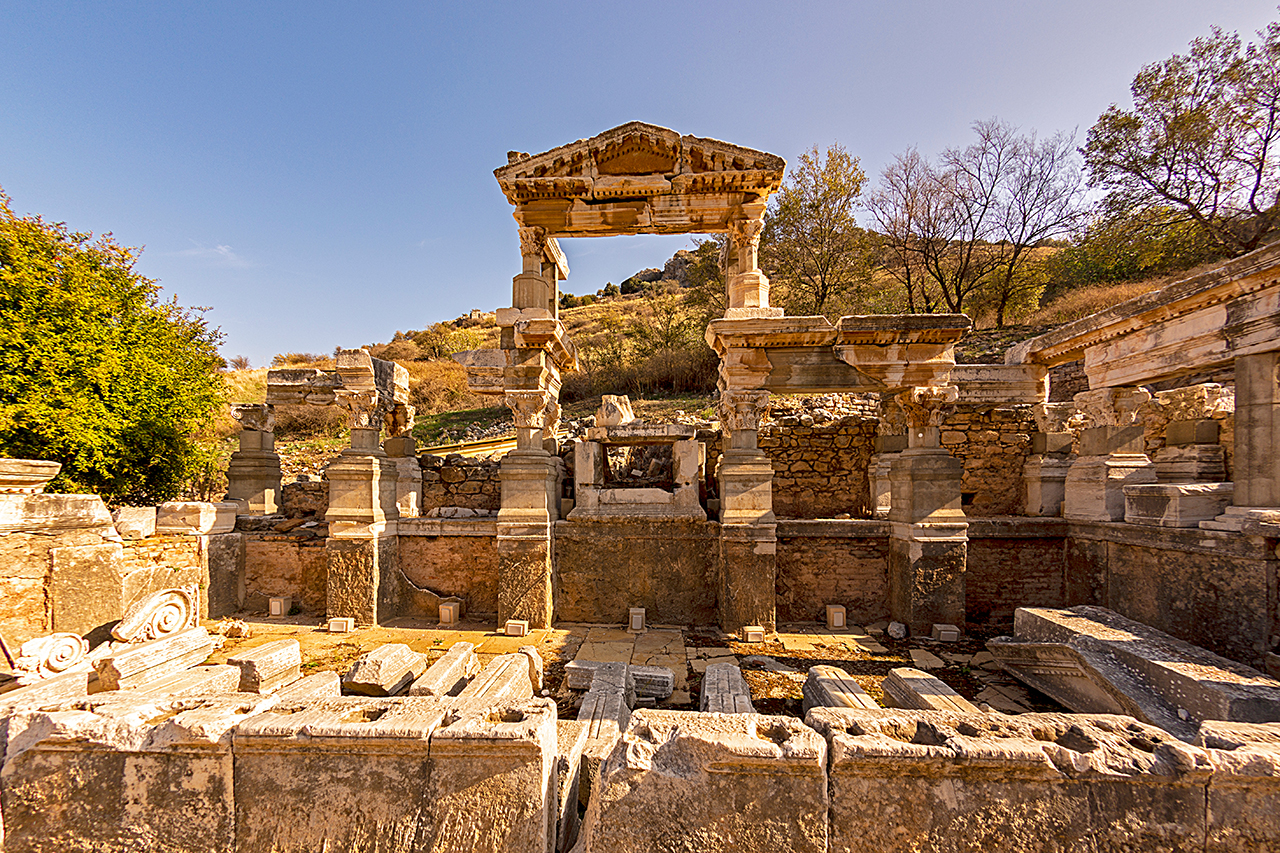
Today, most of the locations are archaeological sites rather than active church buildings. Visiting them is therefore not like moving between seven modern churches. You are exploring ancient cities, ruined temples, streets, theaters, basilicas, and the landscapes in which those Christian communities once lived. That takes time.
Some locations can be visited relatively quickly. Others, particularly Ephesus, Pergamon, Sardis, Laodicea, and Hierapolis, deserve a longer visit.
The question is not whether the three-day tour can cover all seven churches. It can. The question is how much you want to fit into each day.
What Does the Three-Day Seven Churches Tour Look Like?
The three-day tour is the more compact option.
On the first day, the journey begins with Smyrna in modern Izmir, followed by Pergamon. After visiting both locations, you return to Izmir for the night.
The second day is particularly full. You visit Thyatira, Sardis, and Philadelphia before continuing to Pamukkale. The program also includes Hierapolis and the travertines of Pamukkale.
On the third day, you begin with Laodicea and then travel toward the Ephesus region. The day includes Ephesus Ancient City, the Basilica of St. John, and the House of the Virgin Mary before the tour ends with your transfer.
It is an impressive route for three days. It is also demanding.
There are long road journeys, several archaeological sites, hotel changes, and a considerable amount of walking. The schedule needs to remain organized throughout the day because a delay at one stop can affect the time available at the next.
For travelers with limited vacation time, this can still be an excellent solution. You see the complete Seven Churches route without adding another day to your Turkey itinerary.
However, you need to begin the tour knowing that it will not be a slow pilgrimage. It is a focused and active journey.
What Changes on the Four-Day Seven Churches Tour?
The four-day tour follows the same Biblical route but distributes the visits more evenly.
The first day still includes Smyrna and Pergamon.
On the second day, you visit Thyatira, Sardis, and Philadelphia, then continue to Pamukkale for the night. Unlike the three-day itinerary, Pamukkale and Hierapolis are not added to the end of this already busy day.
The third day is dedicated to Hierapolis, the Pamukkale travertines, and Laodicea. You then continue to Kusadasi for the night.
The fourth day focuses on Ephesus, the House of the Virgin Mary, and the Basilica of St. John. That extra day creates an important difference.
Pamukkale, Hierapolis, and Laodicea receive their own day. Ephesus and its surrounding Biblical sites also receive a separate day.
You still travel between several cities, and there is still plenty of walking. This is not a slow retreat with long afternoons at the hotel. But the itinerary feels more balanced.
You spend less of the day wondering whether you need to move on to the next site.
Is the Three-Day Seven Churches Tour Too Rushed?
Not necessarily. It is better to describe it as intensive rather than impossible.
The three-day route works because the transportation, hotel stays, site order, and guiding are planned in advance. A private vehicle and an experienced local guide are essential for keeping the program on schedule.
It can be a good choice if:
- You have only three available days
- You are reasonably active
- You are comfortable with early starts
- You do not mind long sightseeing days
- Your priority is completing the full Seven Churches route
- You are already traveling through western Turkey
- You prefer a compact itinerary over adding another hotel night
However, the tour may feel tiring if you prefer slow mornings, need frequent rest breaks, or want extended time for prayer and group discussion at every site.
The second and third days are especially full. On the second day, you move through Thyatira, Sardis, and Philadelphia before reaching the Pamukkale region.On the final day, Laodicea is followed by Ephesus and other significant Christian sites around Selcuk.
Everything can be visited, but the group needs to respect the timing.
Why Does the Four-Day Tour Feel More Balanced?
The four-day tour solves the main pressure point of the shorter itinerary: Pamukkale and Hierapolis.
In the three-day program, the visit to the Pamukkale region comes after Thyatira, Sardis, and Philadelphia. This creates a long day with both road travel and multiple visits.
In the four-day program, the second day ends after the three churches and the drive to Pamukkale. Hierapolis, the travertines, and Laodicea are visited the following day.
This gives you more time to appreciate Hierapolis as a Biblical location, not just as an archaeological addition beside the white terraces. It also makes the final day in Ephesus more comfortable.
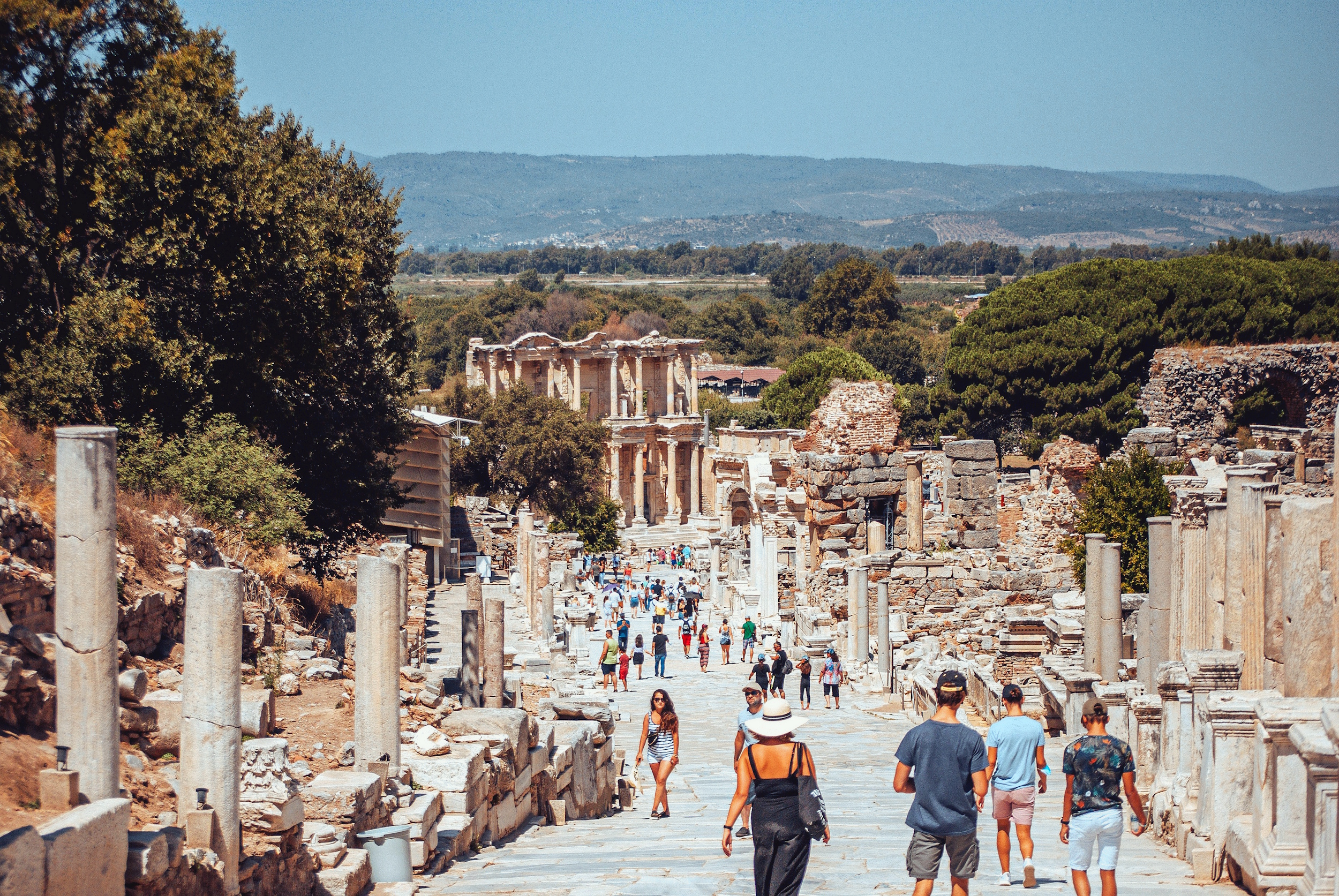
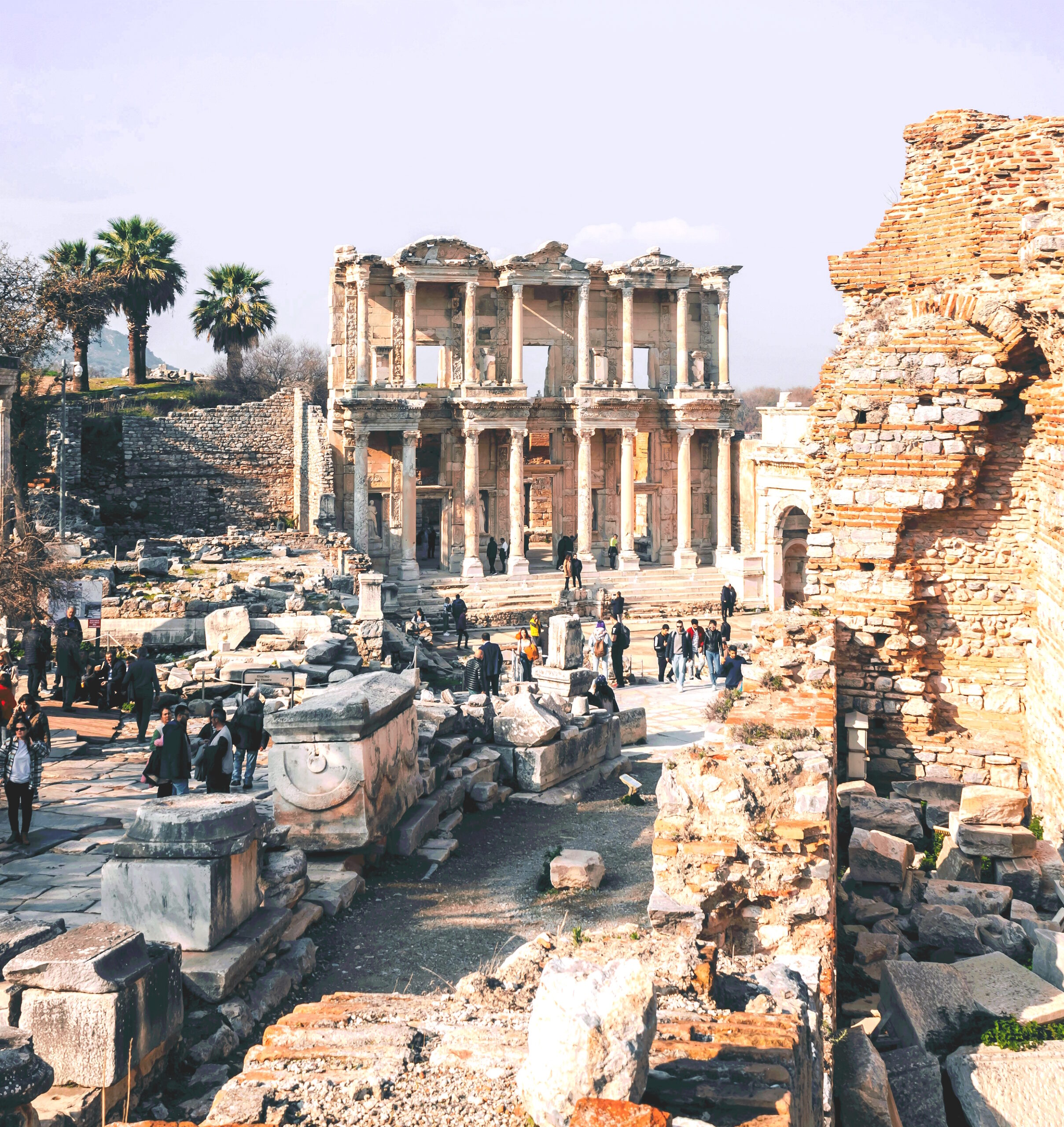
Ephesus is one of the largest and most important sites on the route. It deserves more than a hurried walk between famous monuments. The ancient city is connected with St. Paul, St. John, the early Christian community of Ephesus, and the message to the church that had lost its first love.
With a separate day, there is more room for explanation, questions, and reflection.
How Much Time Do You Need at Pamukkale and Hierapolis?
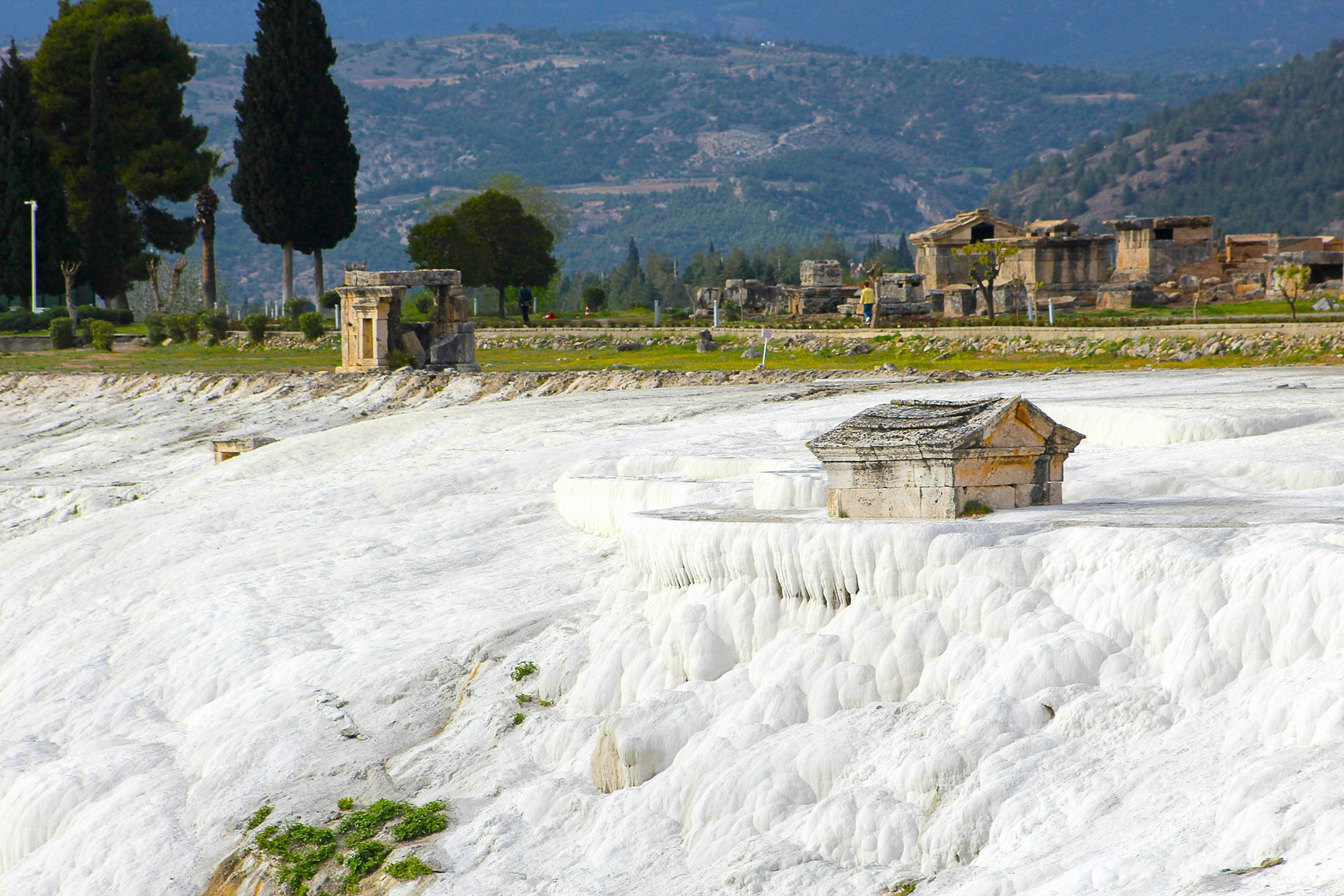
Pamukkale is often described only through photographs of its white travertine terraces. For a Seven Churches journey, however, Hierapolis is just as important.
The city is mentioned in the Letter to the Colossians, and Christian tradition connects it with Philip. The archaeological site includes the ancient theater, streets, baths, necropolis, religious structures, and the wider remains of a major Roman and Byzantine city. The area is large.
Seeing Hierapolis properly involves walking, and some visitors may also want time at the travertines or the thermal areas.
On the three-day tour, this part of the route needs to remain more focused because it shares the day with several other locations.
On the four-day tour, Hierapolis and Pamukkale become part of a dedicated sightseeing day together with Laodicea.
For travelers who care deeply about Biblical history, archaeology, or photography, the four-day version is usually more satisfying.
What About Laodicea?
Laodicea is sometimes treated as a brief stop between Pamukkale and Ephesus. It should not be.
The ancient city has undergone extensive archaeological work, and the remains help visitors understand the wealth and character of the community addressed in Revelation.
The message to Laodicea describes a church that was neither hot nor cold. Standing in the landscape between the thermal waters of Hierapolis and the colder waters associated with the surrounding region gives the Biblical language a more tangible setting.
A good guide can connect the text with the geography, economy, and daily life of the ancient city. In the three-day itinerary, Laodicea is visited before continuing toward Ephesus on the final day. In the four-day itinerary, it is combined with Hierapolis and Pamukkale, while Ephesus is saved for the following day.
The four-day structure gives the guide more freedom to spend time on the context of Laodicea without creating pressure later at Ephesus.
Is There Time for Prayer and Personal Reflection?
Yes, but the amount of time available differs.
Both tours are operated privately. You are not joining a large coach group with a fixed commentary and dozens of passengers. This gives your guide more flexibility.
You may want to read the relevant passage from Revelation at each location. Your church leader may wish to offer a short prayer. Some travelers prefer a few quiet minutes to take in the site without commentary.
These moments can be included in either tour. However, time still has limits.
On the three-day tour, reflection periods need to be planned carefully. Spending an additional 20 or 30 minutes at several sites may eventually reduce the time available elsewhere.
On the four-day tour, the schedule offers more breathing space. This makes it easier to include Scripture readings, short prayers, group discussion, or moments of silence without feeling that the whole day is falling behind.
For travelers who see this journey primarily as a pilgrimage rather than a sightseeing tour, the fourth day is usually worth adding.
Which Tour Is Better for Church Groups?
For most church groups, we would recommend the four-day tour. Church groups often travel differently from individual sightseeing guests.
They may want to:
- Read Scripture together
- Pray at significant locations
- Discuss the messages to each church
- Ask more detailed questions
- Take a group photograph
- Allow members to walk at different speeds
- Spend time together during meals and evenings
Even small delays become more noticeable when several people are traveling together. Getting in and out of the vehicle takes longer. Restroom stops take longer. Some members may want extra time at a site, while others may need to rest. The four-day itinerary handles these realities better.
A three-day tour can still work for a small, active church group with limited time. But the group should understand that it is choosing efficiency over a slower spiritual rhythm.
Which Tour Is Better for Older Travelers?
Age alone does not determine which tour is suitable. Many older travelers are active, experienced, and fully comfortable with long sightseeing days. Some younger travelers struggle more with heat, slopes, uneven stones, and early departures.
The more useful questions are:
- How comfortable are you with several hours of walking?
- Do you need regular rest breaks?
- Are stairs or uneven surfaces difficult?
- How well do you manage long days in a vehicle?
- Are you traveling during the hot summer months?
The Seven Churches route includes ancient cities with uneven ground, slopes, stone paths, and limited shade. Pergamon, Ephesus, Sardis, Hierapolis, and Laodicea all involve walking. It is not possible to remove every physical challenge from the tour.
A private tour allows the guide to adjust the pace and help choose the most manageable route through each site. Still, the four-day option is generally more comfortable for older travelers or anyone with limited stamina. The extra day does not eliminate walking, but it reduces the need to combine too many major sites in one day.
Does the Season Make a Difference?
Yes. Summer brings longer daylight hours, but it also brings heat. In June, July, August, and early September, archaeological sites can become very hot during the middle of the day. Starting early, carrying water, wearing a hat, and planning rest periods become especially important. A three-day program during summer can feel more tiring than the same itinerary in mild spring or autumn weather.
Winter days are cooler and shorter. Rain is possible, and the available daylight must be used carefully.
Spring and autumn are often more comfortable for walking, although weather conditions can never be guaranteed.
The four-day option gives the itinerary slightly more flexibility in every season. During hot weather, the group can take a more measured pace. During shorter days, fewer major sites need to be fitted into the available daylight.
What About Airport and Hotel Logistics?
Both tours can begin with pickup from Izmir Airport, Izmir city, Selcuk, or Kusadasi. However, your arrival time matters.
For the first day to include Smyrna and Pergamon comfortably, you need to arrive early enough to begin the tour in the morning. A late flight can make the first day difficult, regardless of whether you choose three or four days.
The three-day tour includes two nights of accommodation. The four-day tour includes three nights, with overnight stays arranged along the route to support the next day’s program. The extra night increases the total cost, but it also reduces daily pressure.
At the end of the journey, the schedule needs to match your onward flight or next destination. For travelers returning to Istanbul, domestic flights can be arranged separately according to the final drop-off time.
This is one area where it is worth speaking with a tour planner before booking flights. A flight that looks convenient online may not work well with the sightseeing schedule.
Are Domestic Flights Included?
Domestic flights are not included in the basic ground-tour program. Many guests fly from Istanbul to Izmir before the tour and return to Istanbul after the final day. Others begin the tour while already staying in Izmir, Kusadasi, or Selcuk.
Puerto Travel can help arrange the necessary domestic flights and airport transfers.
It is better to coordinate the tour and flight times together rather than booking the cheapest flight first and trying to fit the itinerary around it afterward. The Seven Churches route covers a wide area. Good timing at the beginning and end protects the rest of the journey.
Is the Four-Day Tour Simply a Slower Version?
Not exactly. The route is similar, but the experience is different.
The four-day tour gives Hierapolis, Pamukkale, and Laodicea a dedicated day. It also gives Ephesus, the House of the Virgin Mary, and the Basilica of St. John their own day. This does not mean you spend hours doing nothing.
You are still traveling through western Turkey and visiting major archaeological sites. But the rhythm is less compressed.
That extra space can be used for deeper guiding, questions, photographs, Scripture readings, prayer, rest breaks, and a more natural pace at lunch. For some travelers, that difference is more important than adding another attraction.
Who Should Choose the Three-Day Tour?
The three-day Seven Churches Tour is likely the better choice if:
- You have limited time in Turkey
- You want to complete the entire Seven Churches route efficiently
- You are comfortable with early starts and full days
- You have good walking stamina
- You prefer fewer hotel nights
- You are combining the tour with Istanbul, Cappadocia, or another destination
- Your main priority is visiting the sites rather than spending extended reflection time at each one
This tour is not a lesser version. It is the concentrated version.
With realistic expectations and good planning, it can be a meaningful and memorable journey.
Who Should Choose the Four-Day Tour?
The four-day Seven Churches Tour is likely the better choice if:
- You prefer a more balanced daily schedule
- You want more time at Hierapolis, Laodicea, and Ephesus
- Prayer and personal reflection are important parts of your journey
- You are traveling with a church group
- Some guests need a slower walking pace
- You are traveling with older family members
- You want more time for Biblical commentary and questions
- You do not want each day to feel tightly scheduled
For most travelers who can spare the extra day, this is the more comfortable option. It is also the option we would generally suggest for groups approaching the route as a spiritual journey rather than simply a list of historical sites.
Which Tour Is Right for You?
If three days is all you have, the three-day Seven Churches Tour can be done. You will visit all seven locations, travel with a private guide and vehicle, and see several other important Biblical sites along the way.
But you should expect a full schedule.
If you can add one more day, the four-day tour provides a better overall experience. That extra day gives Pamukkale, Hierapolis, Laodicea, and Ephesus the time they deserve. It creates more room for discussion, prayer, rest, and meaningful engagement with the places described in Scripture.
The choice is not simply between a cheaper tour and a more expensive tour. It is a choice between a concentrated journey and a more balanced one.
At Puerto Travel, both Seven Churches tours are arranged privately. This allows us to select a suitable licensed guide, adapt the Biblical commentary to your interests, and plan the pace around your party.
We will help you decide whether three days will work well for your group or whether the fourth day would make the experience more comfortable and meaningful.